Thinking about buying or selling in Central Ohio and wondering what comes next? You are not alone. With mortgage rates shifting, new jobs arriving, and fresh construction reshaping suburbs, the Columbus area is moving fast. In this outlook, you will learn what drives prices, where supply is headed, which micro-markets to watch, and how to plan your move with confidence. Let’s dive in.
Key drivers in Columbus
Columbus runs on a diversified economy that supports steady housing demand. State government, The Ohio State University, healthcare, insurance and financial services, corporate operations centers, and logistics all play a role. These sectors tend to provide stability through market cycles.
Large economic developments can shift demand patterns across suburbs. The announced semiconductor and advanced manufacturing investment in the New Albany and Licking County area is a clear example. These projects often roll out over several years, bringing higher-paid jobs that raise demand for both owner-occupied and rental housing.
Population growth adds fuel. Columbus has been a net recipient of domestic migration, including young professionals and families. That supports for-sale and rental demand and often concentrates interest in single-family homes across suburban neighborhoods.
Mortgage rates and affordability
Mortgage rates are the single biggest driver of short-term demand. When rates rise, your purchasing power falls and competition typically eases. When rates decline, affordability improves and activity picks up.
Credit standards and loan options matter most for first-time buyers. FHA, VA, and low-down-payment conventional programs can open doors for qualified buyers. In higher-rate stretches, you may also see sellers and builders offer incentives, such as temporary rate buydowns or closing cost help.
If you are tracking rates, use the 30-year fixed average from reliable surveys and check with local lenders on real lock options. When rates move quickly, you may notice more contingencies, longer negotiation windows, and a rise in seller incentives.
Inventory and pricing watch
A few core metrics tell you where the market is heading:
- Months of inventory, or MOI. Less than 3 months signals a seller’s market. Three to six months is balanced. More than 6 months leans buyer’s market.
- Median and average sale price. Look at both to account for high-end sales that can skew averages.
- New listings versus pending sales. If listings rise while pendings slow, demand may be softening.
- Days on market and percent of list price received. Faster sales and higher list-to-sale ratios indicate stronger demand.
- Builder backlog and lot inventory. Long backlogs suggest constrained new supply, while active starts point to more choices coming.
Track these monthly or quarterly. You will spot turning points earlier and make cleaner pricing or offer decisions.
Neighborhood snapshots
Close-in neighborhoods
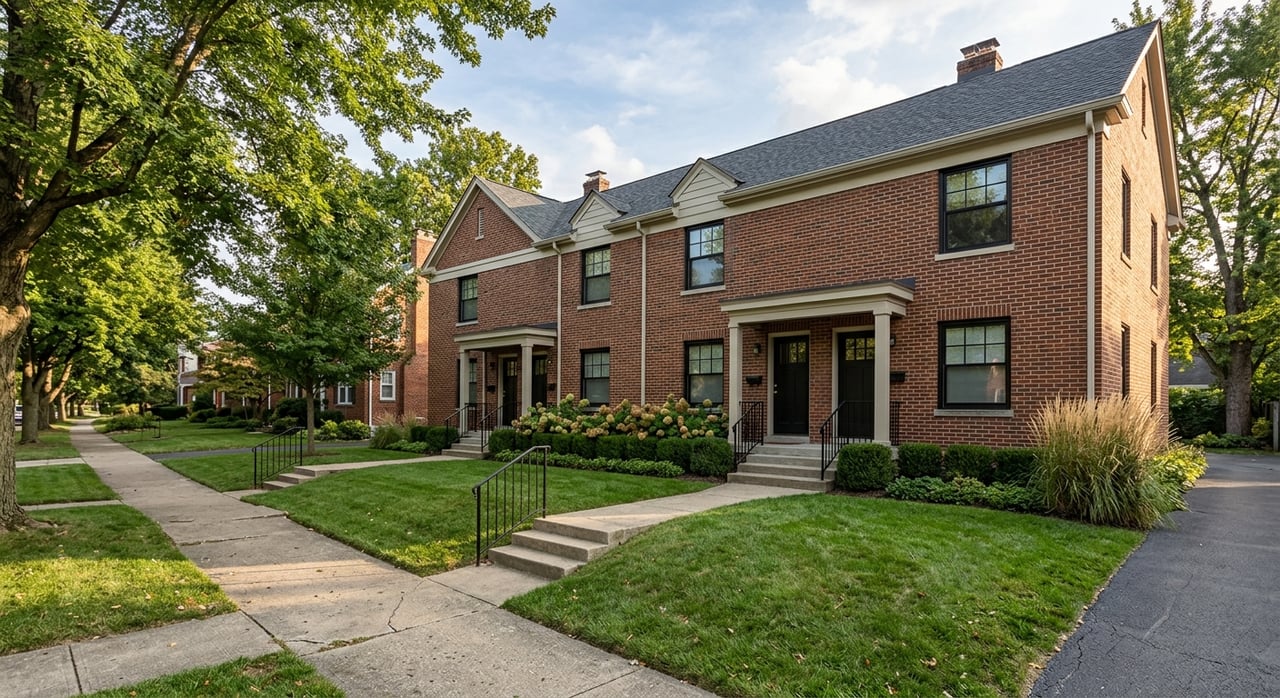
Areas like Short North, German Village, University District, and Clintonville have limited room for new single-family supply. Infill and townhomes add options, but additions are modest compared with demand. This supply constraint often supports price resilience through changing cycles.
Inner-ring suburbs
Communities such as Upper Arlington, Bexley, Westerville, Hilliard, and Gahanna mix existing inventory with pockets of infill and new construction. Commute convenience, amenities, and school district considerations shape many buyer choices. Localized competition can be strong for well-kept trade-up homes.
Outer suburbs and exurbs
New Albany, Dublin, Powell, Pickerington, Grove City, Reynoldsburg, and nearby Licking County suburbs show significant new-home activity. Master-planned communities and multifamily additions are common. A larger new-home pipeline can increase overall inventory and create competition for older resale homes in similar price bands.
Logistics corridors and rentals
Areas near major highways and distribution hubs tend to draw investor interest and multifamily development. These submarkets respond to national logistics cycles and rent trends, which can influence investor activity.
Affordability segments
Entry-level and affordable price bands are often the tightest. Many new single-family builds target move-up buyers, which can limit sub-$300,000 options, depending on current pricing. Policy shifts, zoning updates, and builder lot availability can change this over time.
What to watch this season
Use this quick checklist when you review the market:
- Months of inventory trend, both month over month and year over year.
- Median price change over the last 90 to 180 days.
- New listings versus pending sales to gauge buyer momentum.
- Days on market and list-to-sale price ratios for your target neighborhoods.
- Building permits for single-family and multifamily, plus any announced subdivisions or master-planned projects.
- Infrastructure updates that unlock new supply, such as road widening or sewer extensions.
- The 30-year fixed mortgage trend from established surveys and local lender quotes.
- Rent growth and vacancy near Ohio State and major job centers if you are considering a rental or house-hack.
Plan your move: three scenarios
Scenario A: Baseline, moderate growth
- Market picture. Steady inventory growth as new construction adds options. Prices rise modestly, and sales volumes are stable.
- If you are buying. Expect moderate competition for well-priced homes. Get pre-approved, watch rates, and be ready to move quickly on the right listing. Consider neighborhoods with active new-home pipelines if you want more choices.
- If you are selling. Price to recent comps and be realistic. Short timing windows can deliver multiple showings. Modest concessions can help you avoid deeper discounts. Highlight upgrades and energy or remote-work features.
Scenario B: Rates stay high, demand cools
- Market picture. Demand softens, MOI drifts higher, days on market lengthen, and price appreciation slows or dips in select segments.
- If you are buying. You gain negotiating leverage and more time to shop. Consider asking for rate buydowns or closing help. If timing allows, monitor for a clear decline in rates.
- If you are selling. Price to current conditions and prepare for appraisal scrutiny. Offer incentives only if needed. Cost-effective staging and small repairs can help preserve your net.
Scenario C: Strong job growth, supply lags
- Market picture. Suburbs near new job centers see demand surge. Inventory tightens locally, and prices can jump in those micro-markets.
- If you are buying. Act with urgency in the affected areas. Broaden your search or use flexible timing to secure a new-construction slot. Expect stronger competition for nearby resale homes.
- If you are selling. You likely hold strong negotiating power in these pockets. Consider timing your sale to capture peak interest.
Action steps for buyers
- Get pre-approved and update it if rates move. Know your monthly payment at different rate levels.
- Compare loan structures. Consider adjustable-rate or buydown options only after modeling scenarios with your lender.
- Map your search by supply. Target areas with active new construction if you want more inventory and potential incentives.
- Plan for inspections and due diligence. Budget time for appraisal and repairs. Ask about HOA rules and utility costs.
- If you are considering a build. Evaluate builder timelines, warranty, and how their pricing compares with nearby resale homes.
Action steps for sellers
- Order a pre-listing inspection. Address high-impact repairs before you hit the market.
- Price with precision. Use the latest closed comps and adjust for days on market trends in your area.
- Prepare the product. Staging, professional photos, and clear disclosure of recent improvements build buyer confidence.
- Watch nearby new construction. If a builder is competing with your price band, consider modest incentives or emphasize your lot, location, and upgrades.
- Plan your move-out and next purchase. Line up financing or contingencies early so you can negotiate from a position of strength.
New construction or resale?
New construction adds much-needed supply, especially in fast-growing suburbs. That can create near-term price pressure on older resale homes in similar price ranges. Over time, new investment can lift area amenities and demand, which supports values.
If you want predictability, a builder’s timeline and warranty can be appealing. If you value location, lot character, or mature neighborhoods, resale may be the better fit. Either way, compare total cost, including HOA fees, property taxes, and likely maintenance over the first five years.
How Columbus Prime Realty helps
You deserve boutique, contract-to-close guidance that fits your timeline and goals. Columbus Prime Realty provides hands-on buyer and seller representation, relocation and new-construction advisory, and investor support for rehab and rental strategies. The team pairs neighborhood-first expertise with technology-forward marketing to help you act confidently in any scenario.
Ready to plan your move or test your price range? Connect with the local team that treats your goals like their own. Start with a quick value check or a planning call with Columbus Prime Realty.
FAQs
Will home prices fall in Columbus?
- Prices vary by neighborhood and segment, with close-in areas often more resilient and outer suburbs with robust new construction more likely to see moderation in comparable resale homes, and overall direction depends on mortgage rates and local job growth.
Is now a good time to buy if rates feel high?
- It depends on your timing and housing needs, since higher rates reduce purchasing power, long-term holders may tolerate them with plans to refinance later, while flexible buyers can watch for better leverage as inventory and rates shift.
How will new construction affect my home’s value?
- New construction increases choices for buyers, which can pressure resale prices for older homes in the same price band near term, though over longer horizons new investment can support area demand and values.
Should sellers wait for a better market in Columbus?
- That choice depends on your personal timeline and risk tolerance, because waiting may help if rates fall and demand rises, but it can also mean missing stronger micro-markets tied to new job growth.