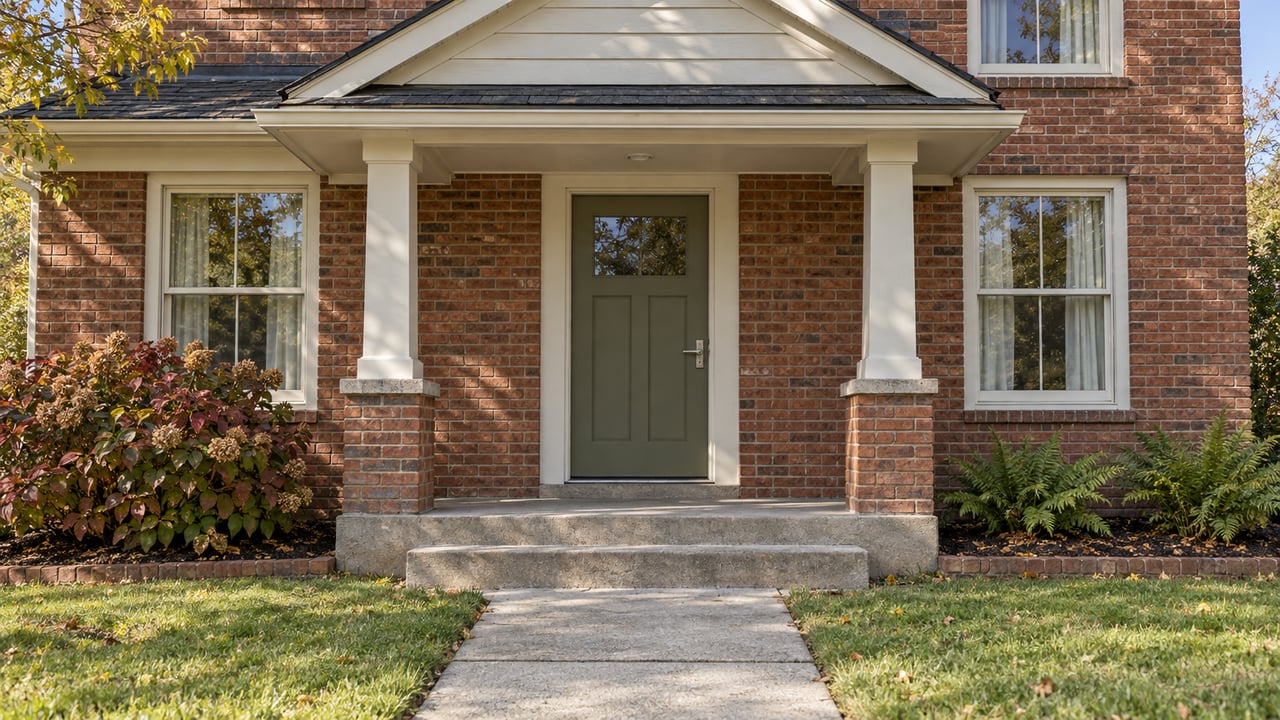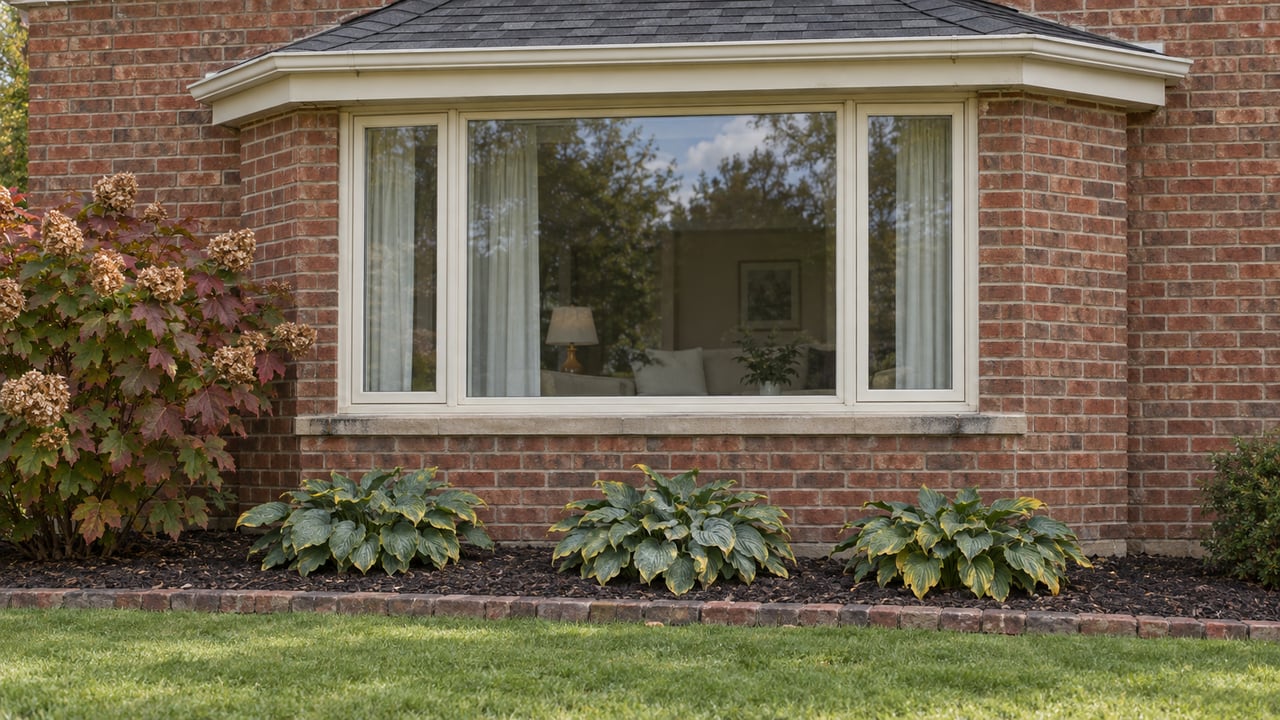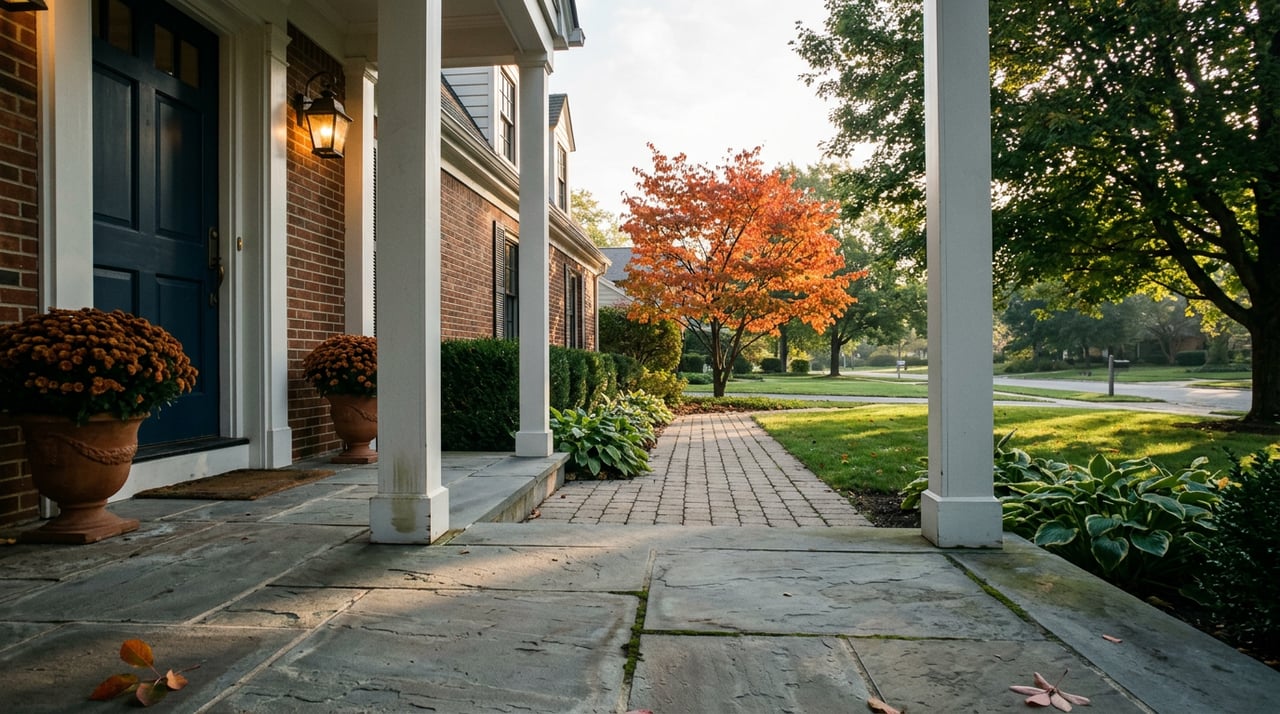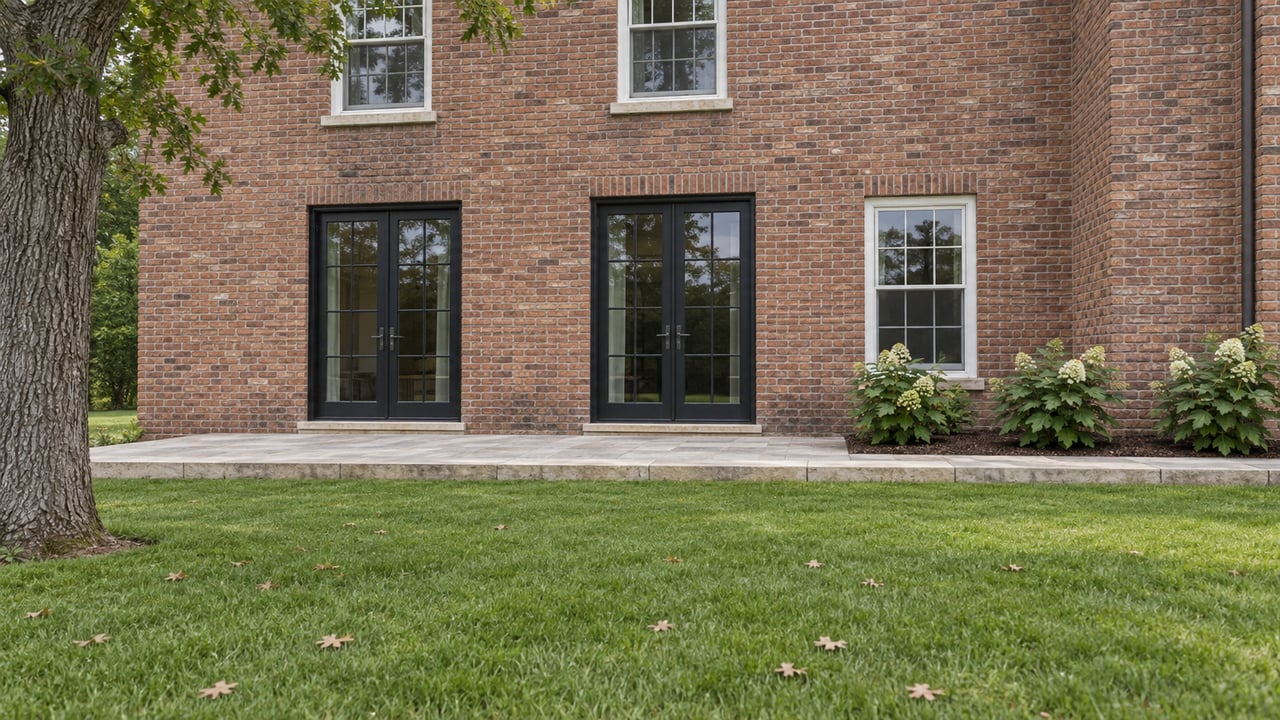
A buyer touring an English Tudor south of Lane Avenue this fall might do the math the way anyone would in a hot market: compare the asking price to a bigger lot up in Powell or a new build out in New Albany, decide the older home is a bargain if you're willing to renovate hard or tear down and start over, and move fast because everything in Central Ohio is moving fast right now. A buyer considering renovation or demolition can check whether the house is a contributing structure in the National Register historic district. In Upper Arlington, the City of Upper Arlington's Community Development Department says that status can affect the demolition timeline.
Upper Arlington's median price gets quoted as one number, but the city is really two markets stitched together at a single street. South of Lane Avenue sits inside the Upper Arlington Historic District, listed on the National Register of Historic Places in 1985. North of Lane does not carry that designation. The line matters more than the price tag, because it changes what a buyer is actually allowed to do with the house once they own it.
What "Old Arlington" Actually Covers
The historic district runs across roughly 536 acres and was recognized, in the city's own words, for its concentration of high-quality twentieth-century American Colonial and English Revival style homes. When the Upper Arlington Historical Society surveyed the area for the National Register nomination, volunteers documented more than 1,120 buildings, and over 900 of them were designated contributing structures, meaning they retain enough of their original design and materials to count toward the district's historic character.
Walk the streets south of Lane and the building guidelines the historical society publishes will point out specific houses as examples: a Norman French style home at 2176 North Parkway, designed by architect Robert R. Royce and built in 1932, with the round turret that mimics a French farmhouse silo. A home at 2427 Tremont Road, built between 1931 and 1933 for George and May Chennell, designed to echo the English village George grew up in. These aren't generic old houses. They're documented, dated, and in most cases legally protected from casual demolition.
North of Lane, the picture is different. Some of those neighborhoods hold genuinely old houses too, farmhouses that predate Upper Arlington's founding and once belonged to Perry Township landowners before annexation. But they sit outside the National Register boundary, which means none of the district's design review or demolition rules apply to them. A buyer comparing two properties at similar price points, one on each side of Lane, is often comparing two different regulatory environments without realizing it.
The 180-Day Demolition Delay
Here's the mechanism that actually affects a transaction. In 2009, Upper Arlington City Council adopted an ordinance designed to discourage, though not prohibit, the total demolition of contributing structures within the historic district. The city's Guide to Demolition in the Historic District says anyone who applies for a demolition permit on a contributing structure has to wait at least 180 days after filing before the permit can be issued. The city calls it an intermission, a window meant to let owners and neighbors consider alternatives before a house comes down for good.
There's an exit ramp. An owner who can show that the six-month wait creates unusual economic hardship can apply to the city's Board of Zoning and Planning for a Certificate of Economic Hardship, which allows a faster path to demolition if the board agrees the hardship is real. But that's a hearing, a finding, and a decision, not a same-week permit pull.
The same city guidance goes further than demolition. Any major addition that exceeds 50 percent of a home's existing square footage, building footprint, or living area also has to meet the design standards laid out for new construction in the historic district, found in the city's Unified Development Code under Section 7.18. So the friction doesn't only hit someone planning a full teardown. A family that wants to nearly double the size of a 1930s Cape Cod through a large rear addition can trigger the same design review that governs brand-new construction on that lot.
None of this exists north of Lane. A ranch built in the 1950s or 1960s goes through the standard building permit process the same way a home in Hilliard or Grove City would.
South Of Lane vs. North Of Lane, Side By Side
| South of Lane (Historic District) | North of Lane | |
|---|---|---|
| Register status | Listed 1985, National Register of Historic Places; over 900 of roughly 1,120 surveyed buildings designated contributing structures | No historic district overlay |
| Predominant era and style | 1920s-1940s Colonial and English/Tudor Revival | Mix of 1950s-1970s ranch and split-level construction, with scattered pre-annexation farmhouses |
| Demolition of a contributing structure | 180-day delay from application, with a Certificate of Economic Hardship option through the Board of Zoning and Planning | Standard demolition permit process |
| Major additions | Design review required once an addition exceeds 50 percent of existing square footage, footprint, or living area, per Unified Development Code Section 7.18 | Reviewed under standard zoning code, no historic design standard |
Why This Changes The Math For Different Buyers
A buy-and-hold investor eyeing a dated colonial south of Lane for a gut renovation and quick resale needs the 180-day window built into the underwriting from day one, not discovered after closing. A rehab that pencils out at a six-week permit timeline in most Central Ohio submarkets does not pencil out the same way here if the exit strategy depends on demolishing part of a contributing structure.
A move-up family planning a two-story rear addition to gain a primary suite and a bigger kitchen needs to know, before they fall in love with a floor plan, whether that addition crosses the 50 percent threshold that pulls in design review. It's the kind of detail that belongs in an offer's due diligence period, not a surprise during the permit process.
Relocation buyers comparing Upper Arlington against Bexley, Dublin, or Grandview Heights should know that Bexley and Grandview Heights/Marble Cliff have each created their own century home celebrations inspired by Upper Arlington's, according to the historical society, a sign that this kind of designation is common across the older inner suburbs, not unique to one address.
The Century Home Signal Worth Checking Early
The Upper Arlington Historical Society estimates there are roughly 490 century homes citywide, homes that have reached 100 years old and retained much of their original front facade. Roughly 320 homeowners have participated in the society's annual Homes of History event, typically held in August, where owners open their homes and share what they've learned about the building's past.
Checking whether a home qualifies is simple before a buyer ever calls an agent. The Franklin County Auditor's website lists a "Yr Built" field on every parcel's summary page. It won't tell a buyer whether a specific house sits inside the historic district boundary or carries contributing structure status, but it's the first filter worth running on any listing south of Lane that looks older than it photographs.
The Market Isn't Slowing Down Around Any Of This
None of these rules are cooling demand. Columbus REALTORS, the regional trade association covering the multiple listing service for Central Ohio, reported that closed sales in the Upper Arlington City School District reached 48 in July 2026, up 29.7 percent from the same month a year earlier, with a median sales price of $667,500, up 14.5 percent year over year. That's a market where buyers are moving quickly and competing hard, which is exactly the environment where a buyer skips the historic district question because there's no time to ask it.
Frequently Asked Questions
Does the 180-day delay apply to every home south of Lane? It applies specifically to structures the city has designated as contributing to the historic district, not automatically to every home in that geography. A property's status should be confirmed with the city before assuming either way.
Will a kitchen or bathroom remodel trigger any of this? The demolition delay and the 50 percent addition threshold are the two mechanisms confirmed in city guidance. Interior work that doesn't involve demolition or a major addition falls under the standard building permit process.
Does being inside the historic district affect what a home is worth? The designation shapes what an owner can do to a property, which in turn shapes renovation cost and timeline. Those factors matter to how a buyer should evaluate a listing, separate from any single year's price trend.
If you're weighing a listing south of Lane against one north of it, we can check a specific address's contributing structure status and demolition history before you write an offer, then run your free home valuation so you know where that property sits in this fall's numbers. Reach out to Columbus Prime Realty and we'll walk the parcel with you before you fall for the floor plan.
This article is general information, not legal, tax or financial advice. Consult a qualified professional about your situation.