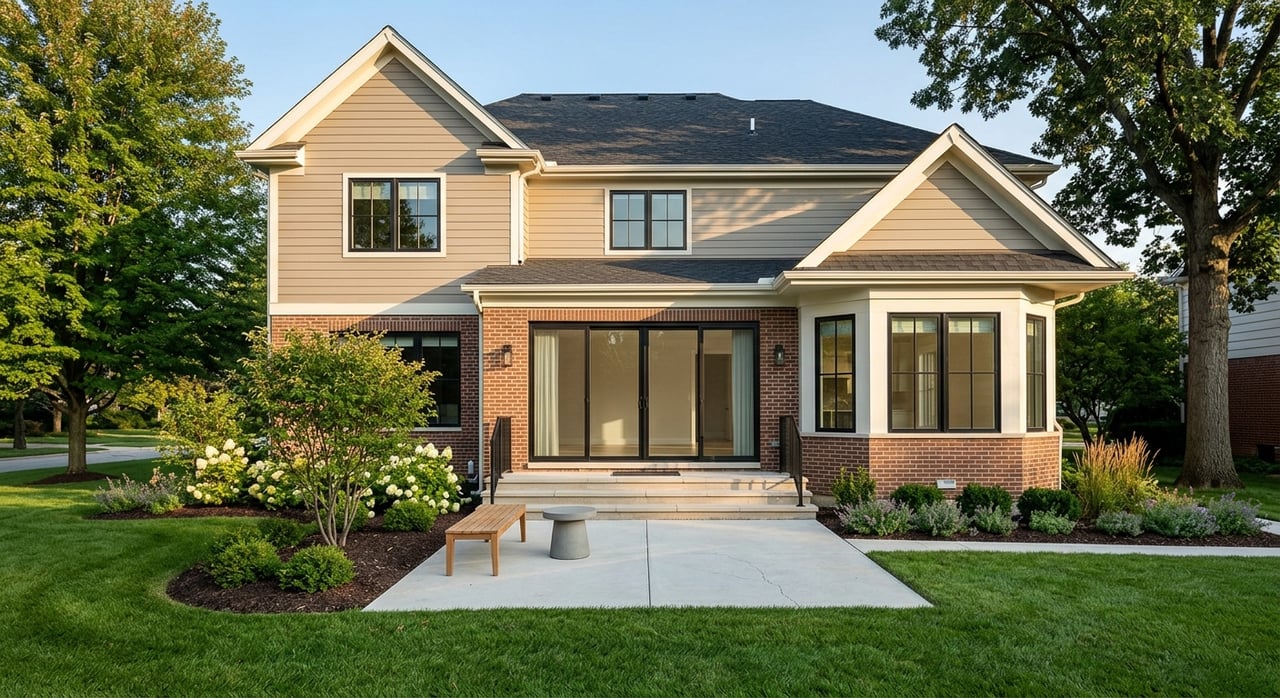
If you have ever wondered why one Grove City home draws strong interest while another a few miles away sits longer, the answer is often the micro-market. Grove City may feel compact, but it does not behave like one flat housing market. When you understand how pricing, age of housing, location, and finish level shift from one pocket to another, you can make smarter buying or selling decisions. Let’s dive in.
Why Grove City Has Micro-Markets
Grove City covers about 18.81 square miles and has an estimated 2025 population of 43,874. It also has more than 1,000 businesses, strong access to I-71, I-270, U.S. 62, and SR-665, and a short drive to downtown Columbus. That mix supports a wide range of buyers, home styles, and price points.
The city’s planning history helps explain the pricing differences. Early growth centered around the historic Town Center, then expanded outward along major corridors after I-71 and I-270. Today, Grove City continues balancing redevelopment, strategic growth, and open-space preservation, which means homes in different areas can compete in very different ways.
City data also shows a 71.4% owner-occupied housing rate, a median household income of $93,161, and a median owner-occupied home value of $310,400. With a large base of stable homeowners and a housing stock that spans several decades, it makes sense that Grove City has multiple pricing zones rather than one simple citywide market.
What Citywide Numbers Really Mean
Public market reports show a seller-leaning market, but the exact stats vary by source. In March 2026, Redfin reported a median sale price of $350,000 in ZIP code 43123, while Realtor.com showed a median listing price of $374,900 for Grove City and Zillow showed a median sale price of $326,667. Those differences are normal because each platform uses different data sets and timing.
Days on market also vary depending on the source. Redfin reported a 54-day median in 43123, Realtor.com reported 27 median days on market for Grove City listings, and Redfin also noted homes were going pending in about 41 days over the prior three months. These numbers are useful for context, but they do not replace neighborhood-level analysis.
The key takeaway is simple: citywide averages are a starting point, not a pricing strategy. If you want to understand value in Grove City, you need to compare homes within the same micro-market.
Historic Town Center and Older Core
One of Grove City’s clearest micro-markets is the historic Town Center and the nearby older in-town neighborhoods. The city describes Town Center as a walkable civic core and continues to support it through planning and improvement programs. That civic investment helps keep this area distinct from newer suburban sections of the city.
Housing here is typically older and often smaller than homes in later-built subdivisions. Research examples include homes built in the 1950s, such as a Brookgrove Cape Cod with an estimated sale range of $246,000 to $298,000, along with other late-1950s properties near Town Center and Lotz. These homes often appeal to buyers who value location, character, and access to the core more than brand-new finishes.
For sellers, this micro-market usually rewards thoughtful preparation. Buyers may look closely at windows, roofing, HVAC, flooring, kitchens, baths, and overall maintenance. In older areas, cosmetic updates and system improvements can have a bigger impact on buyer response than broad citywide trends.
What Buyers Notice in the Older Core
Buyers in this part of Grove City often compare homes based on:
- Proximity to Town Center
- Lot size and layout
- Exterior condition
- Updated systems versus deferred maintenance
- Character and original details
That means two homes with similar square footage can perform very differently if one is move-in ready and the other needs work.
Established Suburban Subdivisions
The next major micro-market includes detached homes built mainly from the 1980s through the early 2000s. This is where Grove City feels more like a classic suburban move-up market, with larger homes, more uniform subdivision patterns, and lot sizes that tend to be more predictable.
Examples from Hoover Crossing and Indian Trails show the kind of value spread common in this segment. Research notes 4-bedroom nearby sales around $395,000 and $435,000 for similar homes in Indian Trails. That is a meaningful jump from many older-core properties and shows how age, layout, and updates influence value.
In this category, buyers often focus heavily on function and condition. Open layouts, finished basements, updated kitchens and baths, newer roofs, and newer HVAC systems can make a real difference. Sellers in these neighborhoods usually do best when they position the home against direct subdivision comps rather than broader Grove City averages.
Why This Segment Varies So Much
Even within the same subdivision era, prices can shift based on:
- Renovation level
- Basement finish
- Lot size
- Interior layout
- Overall curb appeal
This is often the segment where a well-prepared home can outperform nearby competing listings.
Newer Construction and Redevelopment Areas
At the upper end of Grove City pricing, newer construction and redevelopment pockets stand out. These areas often command a premium for newer finishes, lower near-term maintenance, community design, and added amenities.
Beulah Park is the strongest example. The city targeted the 212-acre former racing site for redevelopment next to Town Center, and the project includes major green space and a 32-acre central park. A 2026 sale there closed at $896,248 for a 4-bedroom, 3.5-bath home, which shows just how far pricing can stretch above Grove City’s citywide median.
Autumn Grove is another example of this premium tier. A 2017 home there carried an estimated value range of roughly $572,000 to $692,000. In this type of micro-market, buyers are often paying not just for the home itself, but also for newer community design, amenities, and convenience.
What Supports Premium Pricing
Newer and redevelopment-focused pockets often hold stronger pricing because of:
- Modern floor plans
- Newer finishes and systems
- Lower expected maintenance
- Community amenities
- Walkability or planned green space
For buyers, that can mean a higher upfront cost. For sellers, it means buyers will compare finish quality very closely, even when the location is strong.
Condo and Attached Housing Pockets
Grove City also has a smaller attached-housing micro-market. This includes condos and similar lower-maintenance options that serve a different buyer need than detached single-family homes.
One example from Parkway Crossing shows a condo built in 2008 that sold for $265,000 in 2023, with amenities such as clubhouse and pool access. This kind of product may appeal to buyers who want lower exterior upkeep or a more lock-and-leave lifestyle.
Because this segment is smaller, pricing can be especially sensitive to direct comparable sales. Community amenities, monthly dues, interior updates, and unit location can all affect value. That is why attached housing should always be measured against similar nearby units instead of detached-home data.
How to Read Days on Market Correctly
It is easy to overreact to one citywide number, but days on market works best when you narrow the lens. A home that sits longer than the Grove City average is not automatically overpriced. It may simply be in a slower-moving micro-market, or it may be competing against stronger nearby listings.
On the other hand, if a property lingers well beyond what is typical for its own neighborhood and price band, that can point to a pricing or condition issue. This is one of the clearest reasons local comp selection matters. Time on market should be read in context, not in isolation.
Why Like-for-Like Comparisons Matter
The biggest pricing mistake in Grove City is comparing homes that are not really comparable. A 1955 house near the older core should not be priced using a newer Beulah Park sale. In the same way, a newer premium-area home should not be judged against an unrenovated older property just because both are in Grove City.
A better approach is to compare homes with similar:
- Age
- Style
- Lot pattern
- Finish level
- Location within Grove City
- Community features
This kind of micro-market analysis helps buyers avoid overpaying and helps sellers avoid missing the market.
What This Means if You’re Buying
If you are buying in Grove City, start by deciding which type of market fits your goals. Do you want character and a central location, a traditional suburban layout, newer construction, or a lower-maintenance condo lifestyle? Those are very different shopping categories, even within the same city.
Once you know your target micro-market, your home search becomes more realistic. You can set expectations around price, updates, competition, and how quickly you may need to act. That clarity helps you make stronger decisions when the right property comes along.
What This Means if You’re Selling
If you are selling, your strategy should reflect your exact pocket of Grove City, not just the headline median price. Buyers will judge your home against the options they see nearby, especially in a market where move-in-ready homes and updated finishes can create meaningful pricing gaps.
That is why preparation, pricing, and presentation matter so much. In some micro-markets, cosmetic improvements may help close the gap with competing listings. In others, your biggest edge may come from targeted pricing and marketing that highlights your home’s location, layout, and condition.
When you want a clearer read on your part of Grove City, working with a local team that studies neighborhood-level patterns can make the process much more predictable. If you are thinking about buying, selling, relocating, or comparing values across Grove City, Columbus Prime Realty can help you read the market with confidence.
FAQs
How do Grove City micro-markets affect home prices?
- Grove City home prices can vary widely based on location, age of housing, lot size, finishes, and nearby amenities, so neighborhood-level comps are usually more useful than citywide averages.
What is the price range across Grove City neighborhoods?
- Research examples show older-core homes in the mid-$200,000s, established subdivision homes around the high-$300,000s to mid-$400,000s, newer homes in the $500,000s, and premium Beulah Park sales near $900,000.
Why should Grove City buyers compare like-for-like homes?
- A home’s value is more accurate when compared with similar nearby homes of the same era, style, and condition rather than very different properties elsewhere in Grove City.
What should Grove City sellers update before listing?
- In older areas, buyers often notice exterior condition, windows, roofs, HVAC, flooring, kitchens, baths, and overall maintenance, while newer areas tend to reward strong finish quality and move-in readiness.
Are condos a separate market in Grove City?
- Yes, attached housing and condo communities function as their own micro-market, with value shaped by amenities, dues, unit condition, and recent comparable unit sales.
How fast are homes selling in Grove City?
- March 2026 public reports varied, with median days on market ranging from 27 to 54 days and pending timing around 41 days, so the pace depends heavily on the specific micro-market and property condition.