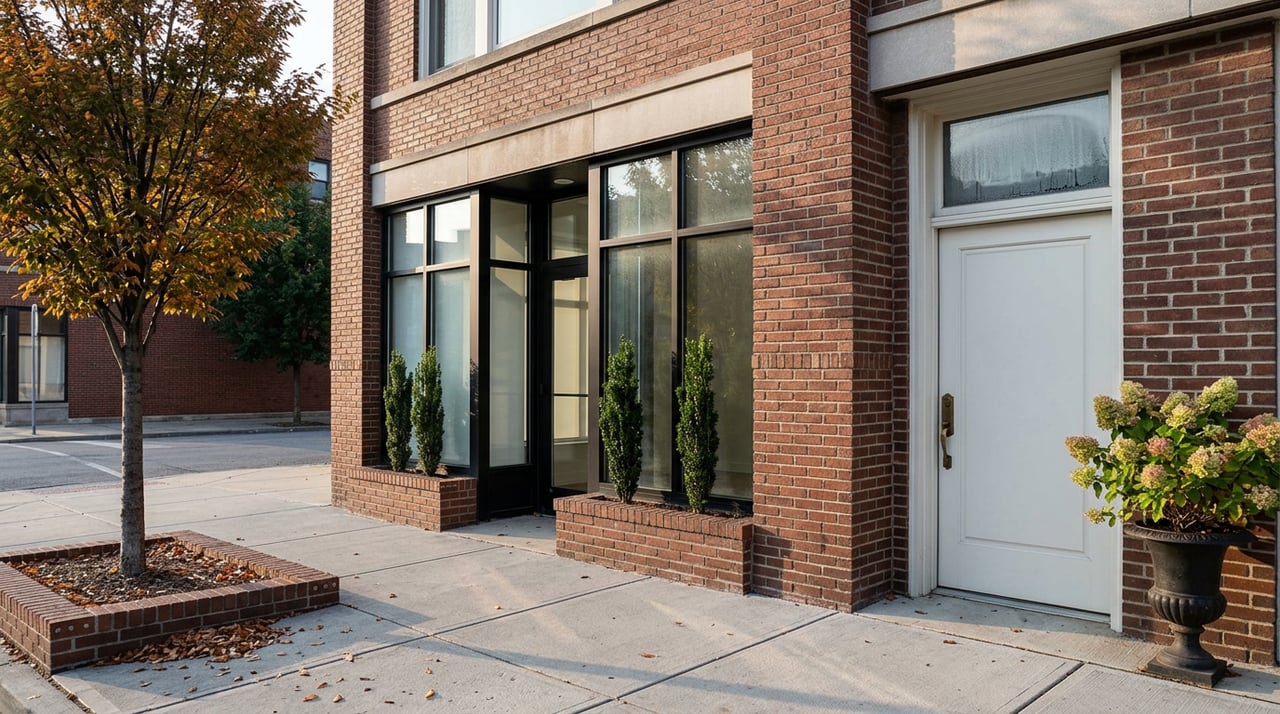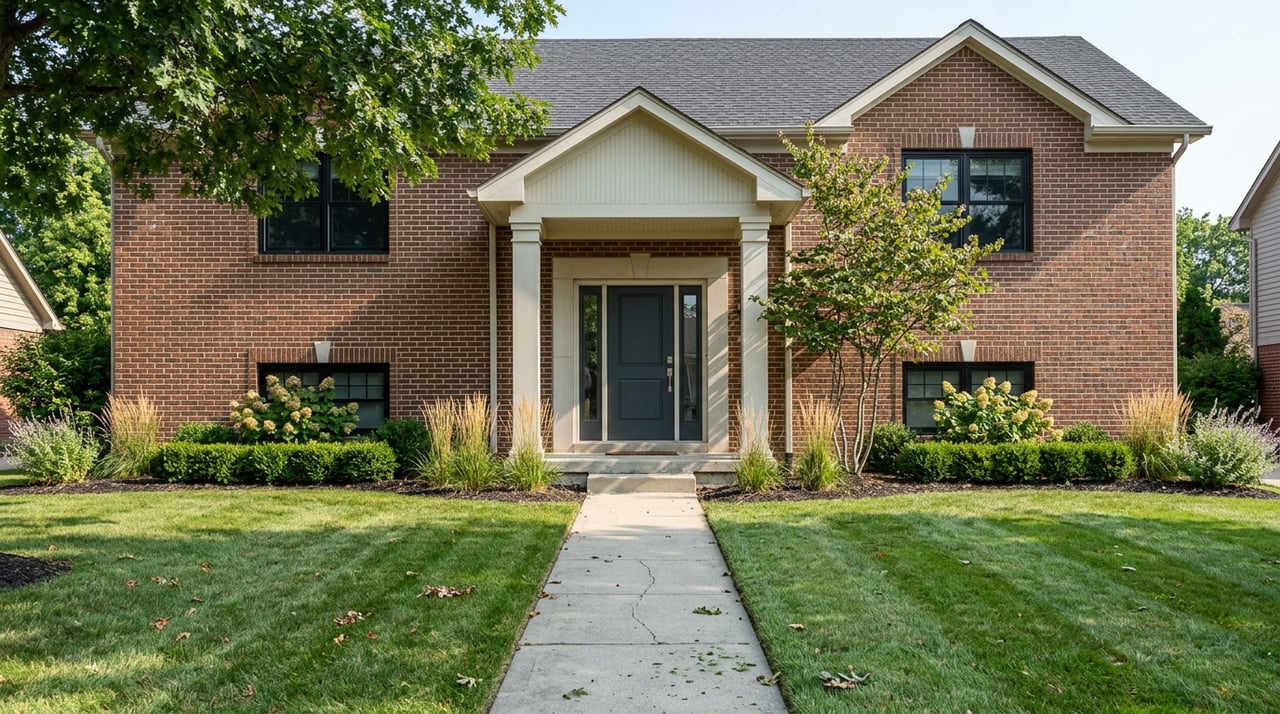
Say you're touring two one-bedroom condos in the Short North on the same Saturday. Same walkability, same brick-and-glass finishes, same distance from Goodale Park. One lists for $1.25 million. The other, a few blocks over, lists for $385,000. You'd expect the cheaper unit to be the easier monthly payment. It isn't. The pricier condo carries an annual property tax bill of $381. The cheaper one pays more than $5,000 a year, over $3,000 of which goes to Columbus City Schools alone.
That gap is not a pricing error and it is not about square footage. It's a property tax abatement, and understanding how it works in this specific neighborhood matters more to your monthly payment than almost anything else in the listing.
The mechanism nobody puts in the listing photos
Columbus has offered property tax abatements in the Short North since the city designated a Community Reinvestment Area there in 2009, a zone the Franklin County Auditor's database shows currently covers 223 parcels with exemptions running up to 100% for 10 to 15 years, according to a Policy Matters Ohio analysis of the auditor's records. The boundary has a hard edge, which is part of why two nearby addresses can land on opposite sides of it and end up with completely different tax outcomes.
Here's what that actually does to a tax bill. A Community Reinvestment Area abatement exempts the increase in assessed value created by new construction or a qualifying renovation. It does not touch the tax owed on the land or the pre-improvement structure. So the $1.25 million condo isn't paying zero taxes because the city forgot to bill it. It's paying taxes on what the property was worth before the building went up, while the improvement itself, the part that makes it worth $1.25 million, is temporarily off the books.
The $385,000 unit on Hunter Avenue, sitting just outside the CRA boundary, gets none of that. It pays full freight on its full assessed value. Which is why the smaller number on the sale sign produces the bigger number on the tax bill.
| $1.25M condo (inside CRA) | $385K condo (outside CRA) | |
|---|---|---|
| Sale price | $1,250,000 | $385,000 |
| Annual property tax | $381 | Over $5,000 |
| Portion to Columbus schools | About $257 | Over $3,000 |
Those figures come from the same Policy Matters Ohio review, pulled directly from Franklin County Auditor records. They aren't hypothetical. They're two real listings the researchers used to make exactly this point: in a CRA, price and carrying cost stop moving together.
Not every abatement is the same length
This is where a lot of buyers get tripped up. The Short North's building stock is a mix of new ground-up construction and older commercial buildings converted into condos, and Columbus's Residential Tax Incentive program treats those two situations differently. A newly built condo structure receives a 15-year abatement measured from the date the property was accepted into the program. A condo created by converting an existing multi-unit building into individual units, which describes a fair number of Short North's loft-style conversions, gets a shorter 12-year term instead, according to a legal explainer from Williams & Strohm on how the city's RTI program qualifies properties.
Neither the 15 nor the 12 resets when you buy a resale unit. The clock started when the building or the conversion was accepted into the program, not when you signed your purchase agreement. A condo abated in 2015 has a very different number of years left than one abated in 2023, even if they're in the same building.
Why "Market Ready" changed the rules for new construction
If you're looking at brand-new Short North construction rather than a resale, there's a second layer worth knowing. In 2018, Columbus City Council overhauled how it awards abatements citywide, and the Short North was specifically flagged as an area where development was likely to happen with or without the incentive. The new policy classified it as "Market Ready," which means developers there generally have to build at least five stories and set aside a share of units at below-market rents to qualify for the full break, rather than getting an abatement simply for building at all.
That policy keeps evolving. As of an October 2025 update from the law firm Bricker, developers of qualifying multifamily projects can now pay a one-time fee in lieu of including affordable units, unlocking the abatement without a negotiated agreement at all. The upshot for a buyer: two buildings that broke ground a few years apart may have qualified under completely different rule sets, with different terms, different conditions, and different odds of the abatement surviving a future council review.
The abatement clock is real, and it runs out
Abatements end. When they do, the tax bill doesn't creep up, it steps up, all at once, to the full assessed value. Columbus Underground reported in 2023 that abatements had already expired on the Northbank Park condos in the Arena District, a comparable urban-core product type just south of the Short North, and those owners went from an abated bill to a fully taxed one in a single cycle.
The exemption applies to the improvement value for a fixed term. When the term ends, the full assessed value becomes taxable again, land and building both.
That's not a hidden clause. It's how the program is designed. But it means the "$381 a year in taxes" you saw on a listing sheet is a snapshot, not a permanent feature of the unit. If that condo has three years left on its abatement and you plan to hold it for ten, you need to budget for what the bill looks like in year four.
What to actually check before you get attached to a number
- Ask for the CRA exemption certificate and the ordinance number. Every abated Short North property should have both on file. If the listing agent can't produce them, that's your first flag.
- Pull the parcel directly from the Franklin County Auditor. The auditor's site shows current assessed value, tax history, and whether an exemption is actually recorded, not just claimed.
- Confirm the term start date and remaining years with the City of Columbus Housing Division. New construction runs 15 years from acceptance into the program; conversions run 12. You want to know which one you're buying and how much runway is left, and the city's Residential Tax Incentives page is the starting point for that verification.
- Ask your lender how they'll escrow. Some lenders base your monthly escrow on the current abated bill, others build in a cushion for what happens when the exemption ends. That difference changes your monthly payment even before the abatement itself expires.
- Model the post-abatement number, not just today's. If three years remain, run your budget as though the exemption already ended. If it holds up, the abatement is a bonus. If it doesn't, you've found the real ceiling on what you can afford.
Why this matters more in 2026 specifically
Two changes happening this year raise the stakes on getting this right. In December 2025, Ohio's governor signed a package of property tax relief bills that takes effect on 2026 tax bills, which will affect the non-abated portion of every Short North tax obligation regardless of exemption status. Separately, Franklin County's triennial property value reappraisal is underway in 2026, with new assessed values being mailed to owners this year and the resulting bill changes landing in 2027. A property's pre-improvement land value, the part an abatement never covers, is being recalculated right now. That number is the floor a Short North buyer pays no matter how many years are left on the exemption above it.
Frequently asked questions
Does the abatement transfer to me when I buy the unit? Generally yes, the exemption runs with the property rather than the original owner, but you should confirm with the City of Columbus Housing Division that the agreement allows transfer on sale and that there are no owner-occupancy conditions attached that could affect you if you plan to rent the unit out later.
Is the tax number I see on a listing accurate? It reflects the most recent bill, but it may not reflect how many years remain on the exemption or whether a reassessment is about to change the underlying land value. Treat it as a starting point, not a guarantee.
Why do some new Short North buildings not have abatements at all? Since the 2018 policy change, "Market Ready" projects have to meet height and affordability conditions to qualify. A building that didn't meet those thresholds, or a developer who chose not to pursue the agreement, simply won't carry the break, even in the same CRA boundary as one that does.
If you're comparing Short North units and the tax lines don't make sense, that's worth a second look before you write an offer, not after. Columbus Prime Realty can pull the auditor record and abatement term on a specific address so you know exactly what you're buying into. Get your free home valuation and we'll walk the numbers with you.